
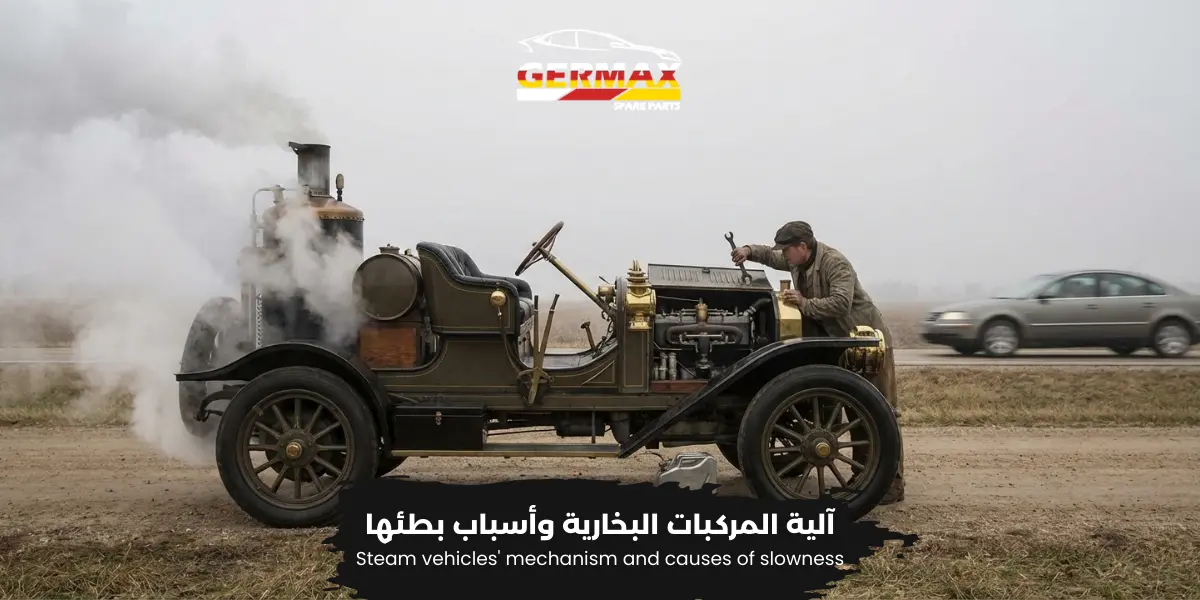
In the early 20th century, America began manufacturing steam Engine cars to avoid the side effects of gasoline-powered cars. Steam Engine cars have a fuel-burning system that heats water, producing high-pressure steam to push the pistons and move the wheels. These vehicles were popular in the late 19th and early 20th centuries due to their quiet, high-speed, and smooth operation. In the era of gasoline cars, steam Engine cars were considered the king of their time and were preferred over horse carts or gasoline cars due to their speed and ability to cover long distances, but they had a drawback in that they frequently stopped because water froze in the tanks due to weather or the whole use of water, so refilling could affect the speed during travel.
Although those cars were famous, the low speed of steam Engine vehicles makes them unattractive today. The heavy tanks make driving and transporting them challenging, whereas modern cars save time and effort and are easy to use, whereas steam Engine cars were complex and costly at the time. These cars do not meet modern needs and lifestyles because diesel, petrol, and electric cars are fast.
History of Steam Engine Vehicles and their popularity in the past
The automobiles we see and use today are not the same as those of the past. The earlier vehicles were powered by steam engines. The first steam Engine vehicle was a military tractor built by an engineer and mechanic named Nicolas Joseph Cugnot. The French army tractor consisted of a steam engine and boiler placed in front of the vehicle, working with the pressure of steam. Later, Nicholas had an accident with one of his steam-powered engines and, at the same time, was left empty-handed without financial support, so his research and inventions stopped. After Nicolas Joseph Cugnot, many investors built steam-powered engines for many vehicles, and many self-propelled road and railroad vehicles were developed, but there were some problems that steam-powered engines faced:
- Steam vehicles were loaded with an overweight
- Designs were not suitable for roads
- Water frozen and finishing issues
Steam-powered engines can be considered the early automotive system in vehicles such as tractors, cars, and rail vehicles, but they need to be recharged again and again, and are heavy.
How a Steam-Powered Vehicle Works?
Fossil fuels such as gas and coal are burned in steam-powered boilers to boil water and produce steam, which, under pressure, moves the pistons. Pistons drive steam-powered vehicles, which are also called external combustion engines. These engines consist of a boiler, steam cylinder, piston, connecting rods, flywheels, valve gear, condenser, and governor. All these components work together to make the steam engine move:
- The boiler contains the water that is heated by the fuel and produces high-pressure steam.
- The steam is collected in a cylinder, where a sliding piston’s movement makes the engine move.
- A valve system controls the flow of steam into and out of the cylinder.
- Hot steam pushes the piston, moving the engine. While the Exhaust Stroke returns to expel the used steam.
- In some steam engines, the condenser efficiently turns steam into liquid water.
- A flywheel is an essential part of a steam-powered engine that makes the rotation smooth.
The steam engine operates using mechanical energy and is considered one of the fastest means of transportation and mobility in the early era of invention.
Reasons for High Engine Temperature in Steam Engine Vehicles
Steam engines work on the flow of boiling water, and sometimes this flow can make the engine overheat, which causes serious safety risks. When an engine overheats, it can damage the car and cause an accident. In modern cars, the warning light alerts you to the vehicle’s temperature exceeding the safe limit, but if your vehicle has no warning light, notice the following:
- Noise of the engine
- Disruption in driving and low power
- An overheated engine produces a smell like something is burning
- Excessive smoke or steam
- The body of the bonnet feels too hot to touch
These are the reasons for high engine temperature in a car that serve as a warning sign for the driver and other passengers, so be careful when your engine gets too hot and follow some simple steps.
- After realising and observing the overheating, pull over and switch off the engine.
- Do not touch the bonnet until it is properly cool. After opening it, make a possible attempt to cool it.
- Remember that all the parts would also be very hot, so search for the cause of the heat.
- Seek professional help in case of overheating
Never ignore the signs of overheating, and do not delay fixing the issue so that your vehicle can perform better.
Advantages & Disadvantages of Steam Engine Vehicles
Steam Engine vehicles are efficient, with low fuel consumption, and are almost noise-free. Most of these are used in trucks, old rails, and vest use for heavy machinery and other fields. They are considered a good choice for long-distance travel. Here are some main advantages of steam-powered vehicles:
Powerful Engine:
The combustion advanced technology bears high pressure, which is common in rail fuel systems. These types of engines are powerful, burn the entire fuel, improve engine performance, and make a vehicle reliable.
Economical:
Steam engines are economical because they require less diesel fuel. They use mostly electronic control stages throughout the system, saving money that would otherwise be spent on high-priced diesel fuel.
Less Noise:
Noise reduction technology is used in heavy-truck stream-powered engines, along with a good exhaust system. The reduced noise benefits the environment and also provides comfort to the driver and passengers.
Disadvantages:
Steam-powered engines are effective in the automotive industry, but they also have disadvantages that make operating steam engines a challenging task for drivers and keepers. These disadvantages include:
High priced:
The major disadvantage is the high price, as these engines are not suitable for small cars and are expensive for individual buyers. Steam-powered engines are suitable for heavy vehicles and industrial use.
Heavy in weight:
Heavy weight is also a disadvantage because large and heavy vehicles, due to boilers, furnaces, and water storage, make the steam-powered engine heavy machinery that is not easy to move from one place to another.
Expensive maintenance:
Large, heavy steam-powered engines are built into larger vehicles and are not useful for every type of vehicle. They cannot be carried by the common people, and no general maintenance is sufficient for them. Expert technicians and experienced mechanics are needed for maintenance at a high cost.
In short, steam-powered technology was a great invention in the transportation industry and has both advantages and disadvantages. The engines have strong power, low noise, lower fuel consumption, and efficient boiler operation. On the other hand, the heavy machinery is suitable for industrial use, but its speed is comparatively lower than that of modern vehicles.
Impact of Steam Engine Design on Vehicle Speed
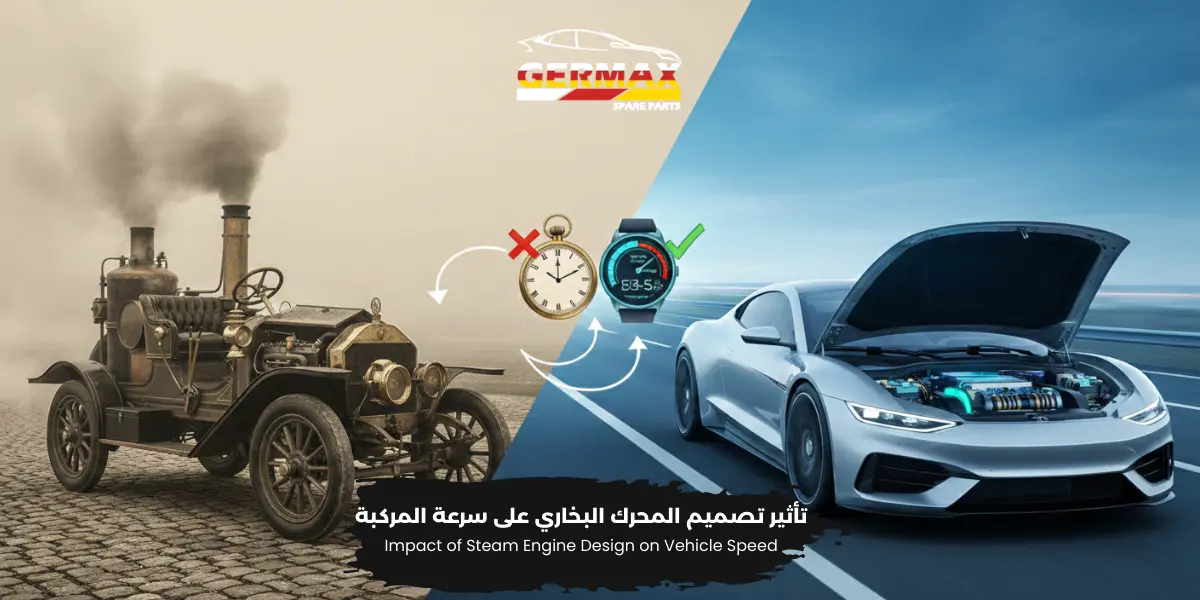
Early steam-powered engines were heavy and bulky, with built-in boilers and pistons that converted steam pressure into the motion of the vehicles. The bulky engines were not easy to move, and their weight reduced the speed of the vehicles. Another major reason for the low speed was that building up steam pressure was a time-consuming process, and the boiler needed a large amount of water to produce heat, taking significantly longer than starting a modern gasoline engine. As a result, the power that accelerated the engine was not able to work quickly. The lack of advanced mechanisms affected the reasonable speed of the steam-powered vehicles.
The engines were composed of many parts, such as pistons, crankshafts, rods, and heavy bearings, and all the components worked against each other, lacking modern systems. These factors reduced power and ultimately limited the vehicles’ speed. Early steam engine designs also struggled to control speed precisely. Steam engines convert pressure into motion, but without a reliable method to regulate that pressure and control how much steam enters the engine cylinders, maintaining a desired speed was difficult.
When discussing modern steam-powered engines, they can’t operate without the factors built into early steam-powered engines and vehicles, unlike modern automobiles, electric cars, and diesel-powered vehicles. Steam-powered engines are long-distance vehicles, but their low speed makes them a second choice in modern scenarios.